Common Ground: A Collaborative Learning Initiative
Bowdoin College Children’s Center and Maine Early Childhood Outdoors Presents
Fall 2026 Workshop:
Building a responsive curriculum that considers how children learn outdoors by following their interests, exploring materials and relationships, and using time in their own ways, while supporting educators to make meaningful contributions without taking over childrens’ learning.
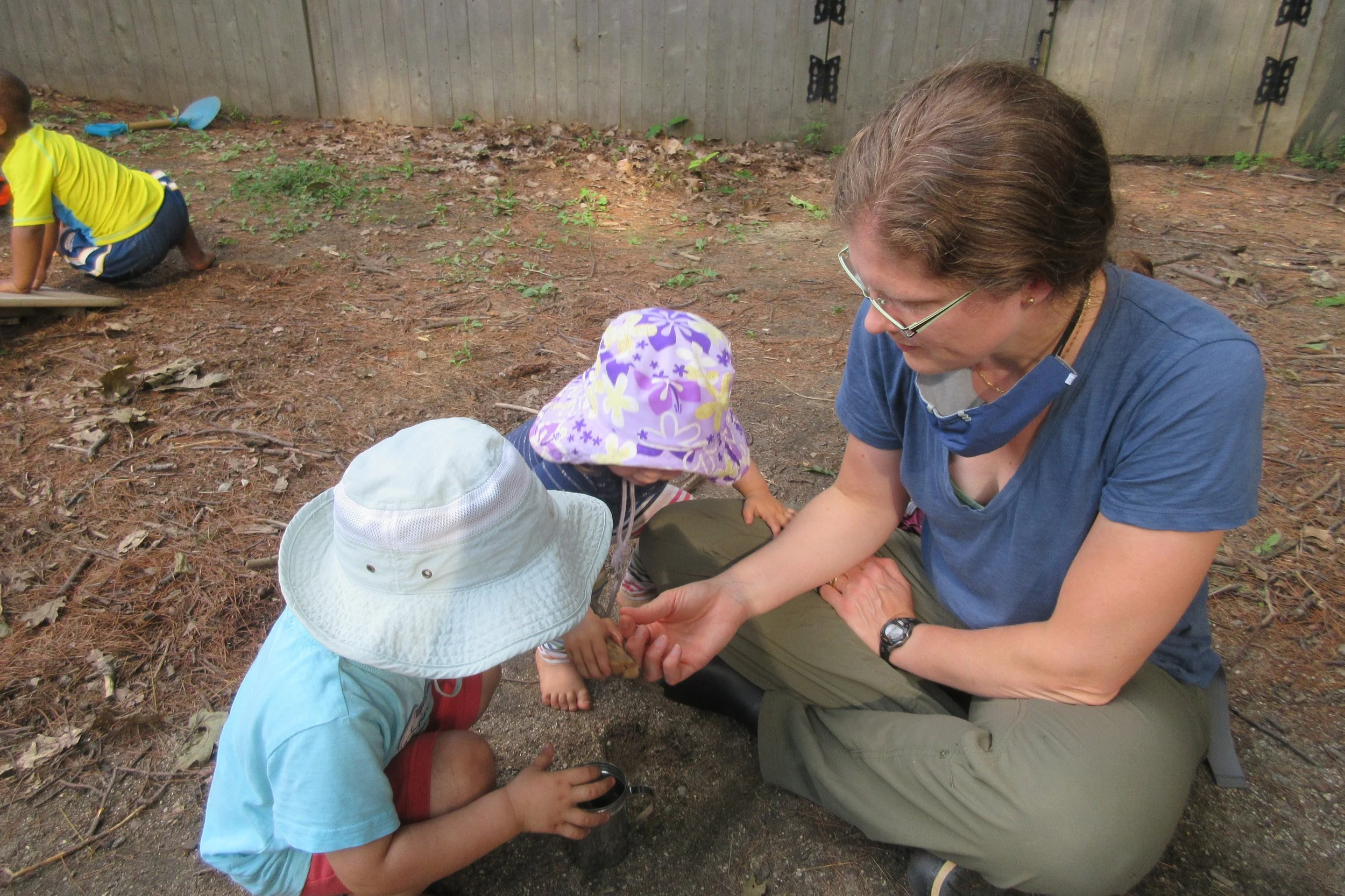
The Common Ground Partnership is a collaborative professional relationship between Maine Early Childhood Outdoors and the Bowdoin College Children’s Center located in Brunswick Maine.
Rooted in belonging, this partnership advances nature-based learning that honors children’s identities, cultures, abilities, and lived experiences, and removes barriers to outdoor learning by intentionally creating inclusive environments where every child feels empowered to belong in nature.
Workshop Series
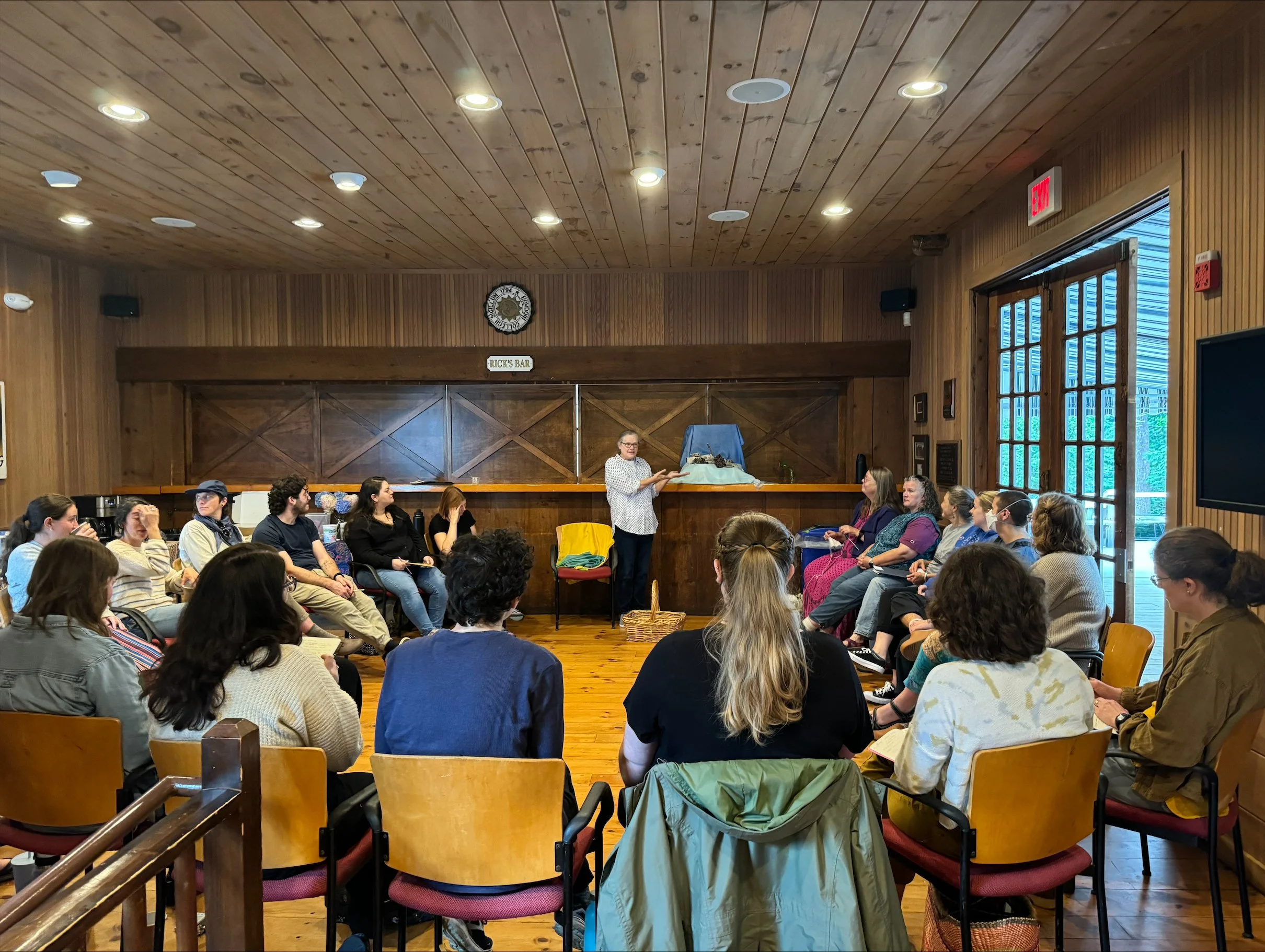
All workshops are held in-person at the Bowdoin Children’s Center in Brunswick.
These workshops are grounded in developmental theory, equity-centered practice, and our ongoing work with outdoor, nature-based programs.
Drawing from observations of children’s social interactions in outdoor learning environments, the sessions are shaped by key questions that have emerged through prior professional dialogue. Participants will engage in reflective and collaborative inquiry to examine how intentionally designed outdoor experiences can support children’s sense of belonging, honor diverse identities and abilities, and align with what we know about child development.
Together, we will extend this shared learning to strengthen inclusive, responsive practice in outdoor settings.
Workshop 1:
Philosophy of Outdoor Curriculum: Recognizing Shared Land and Space
Tuesday, September 22, 2026, 5:45-7:30pm
This workshop explores the philosophy of outdoor curriculum, including concepts of shared land, shared space, and respect for nature. Building on a responsive curriculum that weaves together STEM learning, gender expansiveness, race, and cultural diversity, we consider how children learn outdoors by following their interests, exploring materials and relationships, and using time in their own ways. We will also explore how caregivers can make intentional contributions through stories, songs, gatherings, conversations, and materials without taking over children’s learning.
Learning Objectives
Understand key principles of responsive, outdoor nature-based curriculum.
Explore shared land and space in ways that are meaningful to young children.
Recognize how children’s interests and exploration can guide curriculum.
Balance intentional teaching with child-directed outdoor learning.
Workshop 2:
Implementation of Outdoor Curriculum: Bringing Inclusivity to the Fore
Tuesday, October 20, 2026, 5:45-7:30pm
This workshop focuses on how children’s outdoor play can illuminate themes of inclusion, identity, culture, race, and gender expansiveness. Caregivers will consider how observation can inform curriculum and when to allow play to unfold without interruption versus when thoughtful engagement is needed. We will also explore conversations around conflict and social/emotional learning, as well as staffing practices that ensure experienced caregivers are available for these important interactions.
Learning Objectives
Identify themes of diversity and inclusion emerging through children’s play.
Use observation to inform responsive outdoor curriculum.
Recognize when to observe and when to intentionally engage.
Support inclusive conversations, conflicts, and social/emotional learning.
Workshop 3:
Bringing Families Closer to Shared Community Through Systems That Support Outdoor Nature-Based Play
Tuesday, November 17, 2026, 5:45-7:30pm
This workshop focuses on the systems and family partnerships that make outdoor nature-based learning successful. We will consider how bias and cultural differences affect families and staff as programs move from traditional indoor curriculum to outdoor learning. Participants will explore practical systems for clothing, weather, staffing, space preparation, and curriculum planning, as well as ways to use observations, curriculum themes, and photographs to help families understand and connect with children’s outdoor learning.
Learning Objectives
Identify systems that support consistent outdoor nature-based learning.
Consider bias and cultural differences when working with families and staff.
Strengthen practical systems for clothing, staffing, and outdoor preparation.
Use documentation and communication to build family understanding and shared community.
Participation Stipends:
MaineECO values the content of these workshops and would like as many teachers to participate as possible.
We recognize that compensation, travel and childcare costs can be barriers to our early childhood professionals attending evening training sessions.
Available stipends are listed below and stipend forms will be available at the training sessions. Anyone is able to receive the stipend, no eligibility requirements are required.
A current W9 will be required to receive a stipend. These stipends are made possible with generous funding and in kind support from Quimby Family Foundation and Bowdoin College Children’s Center.
Available Stipends:
Participation Stipend: $50 per session attended
Travel & Childcare Stipend: up to $100 per session
Registration
It is recommended for participants to attend the entire series to gain the full scope of content and the most reflective experience but it is not required.
Participants can attend any combination of sessions that they choose.
Registration is free and done by filling out the form, linked below.